By: Anwarzada Gulyar
The towering mountains of Bajaur, their rugged slopes cloaked in snow, and the desolate valleys echo a silent tale — not just of harsh climates but of a life defined by deprivation. One such area is Sarwono T-Basta, nestled near the Afghan border in Salarzai Tehsil — a region still shackled by centuries-old neglect. Here, the light of the state has yet to fully arrive.
The residents of this remote valley are deprived of the most basic necessities of life. There is no electricity, no paved roads, no hospital, and no school. Young girls still carry clay pitchers on their heads, walking miles through hilly terrain to fetch water from distant springs. For boys, educational institutions are nonexistent — and for girls, education is no more than a distant dream.
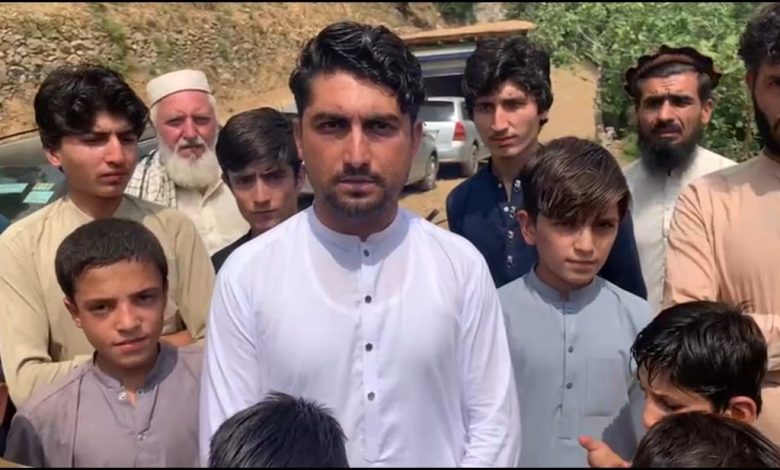
Amid this forgotten land lives Abdullah — an ordinary young man with an extraordinary spirit. He is the same Abdullah who dared to light a small flame of hope in a village drowning in darkness. Where the government’s eyes remained shut, he chose to keep his open.
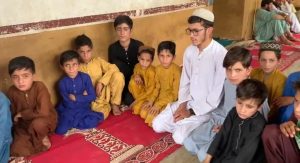
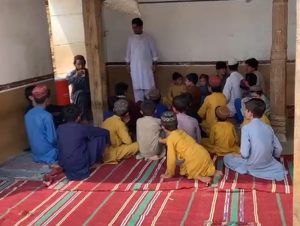
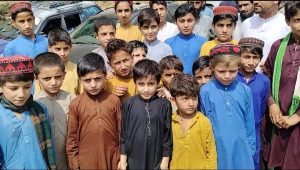
Near his home, Abdullah converted an old, unused mosque into an informal school for children. There are no desks or chairs, no blackboards or fans — but Abdullah’s resolve outweighs the absence of all facilities. He reads books himself, prepares lessons, and teaches the same material to the eager children.
“These children are thirsty for knowledge,” he says. “I’m simply trying to quench that thirst. I don’t have the resources to give them school bags, books, or slates — but I can’t bear to see them grow up in ignorance.”
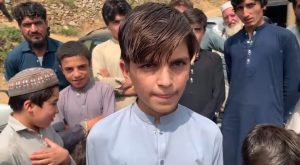
A child named Ziaullah says he dreams of studying, but with the nearest school four hours away, it’s impossible for him to attend. Another boy, Hunar Khan, dreams of becoming a doctor, but the absence of education in the region crushes his hopes. These are not isolated stories — there are hundreds of such children whose eyes sparkle with dreams, but no one is there to give them wings.
Abdullah didn’t just kindle the flame of education — he also stepped forward to address basic healthcare. When he realized that even minor illnesses forced people to travel long distances, he established a makeshift clinic on a self-help basis.
He isn’t an MBBS doctor, nor does he hold any grand degree — but he understands pain, and he practices humanity. Whether it’s a fever, a wound, or pain — he does what he can, simply so that the helpless don’t remain helpless.
Abdullah dreams that the government will one day build a community school in the area, giving children a reason to hope. He says with conviction:
If these children are educated, even the mountains will bow to them. But sadly, no official ever comes here, nor does any ministry seem to care.”
His noble efforts haven’t made headlines in the media, nor has he received any awards or honors. Yet he quietly continues to do revolutionary work — a revolution born not of bullets, but of books; not of slogans, but of selfless action.
Young men like Abdullah are the true wealth of a nation. They often stand alone, but their determination is equal to that of thousands. They don’t ask for handouts — only opportunities. If people like Abdullah are given official support, even Pakistan’s most underdeveloped regions can bloom with progress.
Where governments continued to sleep, a young man awoke — and proved that when dreams are true, paths begin to appear on their own.